
Firstly, I chose to look into the Street Fighter franchise because I have always had an interest in the games that it has spawned. Street Fighter 2 was the second game I ever played as a child and as I have grown up the series has been a constant presence in my gaming life. I wanted to learn much more about the history, the success and failures of the franchise, the background of the games I had been playing for years in hopes of answering some questions I have always had about it.
I tried to remain at an objective standpoint throughout the case study, making sure that my own predetermined ideas about the franchise did not change what I found through research. I feel this was successful and that through a chronological order of events I have compiled a brief overview of the life of the Street Fighter franchise so far that touches on the elements mentioned in my hypothesis. Using a mix of academic texts, interviews, statistics, blogs and reviews I have concentrated on certain games from the series, most notably the principle installments, and tried to find anything and everything that may be relevant and interesting about the franchise. Depending on the context of each game in the series, I tried to find how the public and critical audience received them each and why they found the response that they did. In addition to this I tried to give a brief overview of the most interesting aspects of the game in general, inside and outside of the object, looking into areas of its commercial success, the cultural effects they had and the audience they garnered.
As I began the study I was immediately struck by just how massive an impact the Street Fighter franchise had had on gaming at the start of the nineties. It was not until I started to truly research and delve deeper into the background of Street Fighter 2 that I uncovered how it had grown from its predecessor, the original Street Fighter, and how that in turn was created as a response to the lack of anything else like it on the market at the time. With the release of its sequel, Capcom had created a genre-defining game that would save many arcades from bankruptcy, create a cast characters still remembered today and kick-start the beat-em-up genre with many clones following in its wake. From researching this franchise it has made me understand why it was, and is, so popular among the gaming community. The cultural effect it had was quite phenomenal, and it was felt all over the globe. Movies, TV shows, card games were created under the Street Fighter banner.
However this case study also made me realize the downfall that Capcom seemed to bring on themselves. After the initial success of Street Fighter 2, many updated versions of the game were released. Players started to bore of the same game, they wanted a sequel. Capcom halted, clones of the game started to take more of the audience that Street Fighter had created in the first place. Instead of giving the audience what they wanted, they released a prequel, Street Fighter Alpha. Though well received, it did not match up the massive success of its predecessor. Capcom had created a game that was far too similar and lacked innovation. Again, Capcom decided to add extra updates and installments to a game that was losing the interest of its core demographic. With the advent of 3D gaming, fighting games had been taken into the new generation. Street Fighter was unfortunately left behind. Forays into 3D failed to find the same success as other games on the market. It seemed Capcom was resigned to the fact that what it did best was 2D gaming, so they stayed there.
Prior to creating this study, I had an idea about the troubles the series had found with the competition from 3D, but from my perspective now it has had an interesting effect on my view of the creative decisions of the franchise. I feel personally that Capcom had started to become greedy after realizing the success of Street Fighter 2, so they tried to garner as much money out of it as possible with update after update of the game. I am in two minds with whether I agree with this. Instead of giving the audience the sequel and innovation they craved, they instead took a step backwards and gave them something far too safe and similar to what was already created. On the other hand, they had perfected a gameplay structure that was unmatched by any other fighting game at the time. However when Street Fighter tried to catch up on the 3D craze, they were already too late to find a place in the newcomers and failed the capture the audience that they had years before. While there is nothing wrong with staying true to the franchise’s 2D look and feel, I believe that if more time was spent on creating another ground-breaking game rather than constantly tweaking the same game model over many years that Street Fighter would have remained a force to be feared through the nineties and through to the decade after. To be honest, this case study has almost made me view the franchise and the directions it took in an almost negative light.
In conclusion, I have enjoyed how this case study has progressed. I am glad that I chose to look into Street Fighter as it has kept my interest and I have been genuinely excited to look more into a franchise that I love. I am concerned that I may not have adhered to the model explained in the brief however as I feel the case study as a whole is much more like a history lesson, rather than a set of texts summarized coherently. Though this is troubling I am very happy with what I have found out about the franchise. I feel that I have looked into the relevant materials and commented on the most important aspects that I could find. I found the research process to be not much trouble at all, with the Internet being extremely helpful in aiding me in the project. I feel I was able to find a rich amount of information and I hope that I have used it appropriately. I feel quite proud with what I have accomplished here.
Word Count: 1076
Bibliography and Sources at bottom of page.
Saturday, January 2, 2010

Friday, January 1, 2010
Contemporary Updates
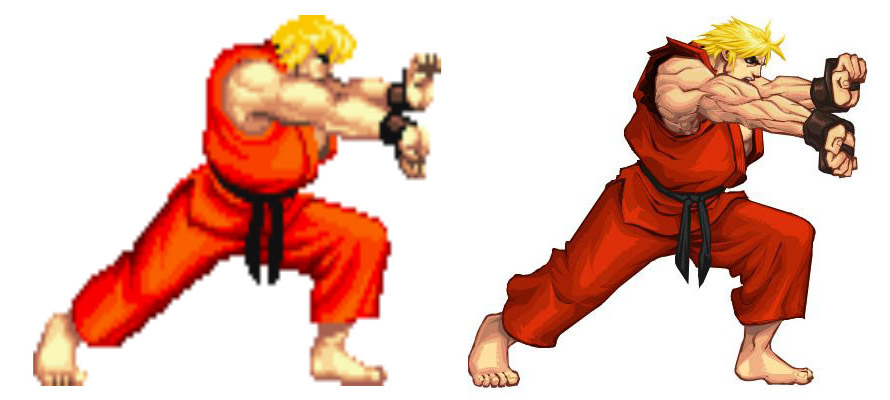
Super Street Fighter 2 Turbo HD Remix is a 2D, 2008 remake of the last original iteration of the Street Fighter 2 game. Released as a download-only game for the Xbox 360 Live Arcade and the PlayStation Network by Capcom, it retains the gameplay of the original with updated visuals and an interesting musical score made an Internet community. As you can see above, high definition visuals were brought to the game, drawn by UDON Entertainment in 1080 pixel resolution. The game started out as port of "Super Street Fighter II X for Matching Service", a Japan-only Dreamcast game which included an online multiplayer mode, and underwent a "19-month development cycle" [1]. To best test the network capabilities of the game, a beta version was released online to allow players to log errors, a much more stream-lined way of testing a game with the advent of broadband and Xbox Live/PSN. The game was very well received by critics and fans alike.


I believe the really interesting fact about this re-imagining of the game however is the audio. Hailed as Game Audio 2.0, Capcom took a chance to mix things up and contacted game-music-remix-community OverClocked Remix to create the soundtrack for the game. Well known for their diverse collection of homemade, individual remixes of game music, Capcom found the community's "Blood on the Asphalt" album, a number of remixed songs from Street Fighter 2, and contacted the site in hopes of them creating the soundtrack for the new game. This turned into a very successful venture. Not only did a high-class soundtrack be created, Capcom engaged something that had rarely been seen before. By allowing a community of fans to actually participate in the creation of a part of the game, Capcom delved into a very interesting participatory culture outside of their company and franchise, right at the grass roots level of fandom. I think this is very commendable and also very successful, the soundtrack as a whole is a joy to listen to, both for the nostalgia and to see how such well-known themes have evolved through the use of modern technology. It hints at the direction of which the games industry may be headed, with increased participation by the audience, helping create the game they want to play. With such iconic music, which many of the composers of the community grew up with, there was an immediate font of memories to draw from, "Zangief's theme is pretty much lodged deep in the part of my brain that connects to the spine." - Shael Riley [2].
You can download the whole album for free, here.
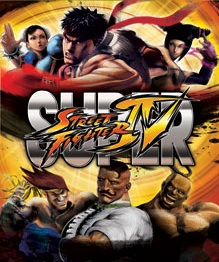
Street Fighter 4 was a critical and commercial success and has been branded as the game that has saved the franchise. Even rival games have praised its success, noting its part in the resurgence of the fighting genre. "I was very happy to see it make a comeback – especially with that new look it returned with while staying true to the original formula." - Tekken 6 director Katsuhiro Harada [3]. There were higher than expected sales of the game, with 2 million shipped copies in the first few months, regardless of the heavy piracy of the game that hit before release [4]. So in true Capcom style, it was decided to create an updated installment of the game, named Super Street Fighter 4, much in the same vein as the updated versions of Street Fighter 2.
While it was original thought that Super Street Fighter 4 would be released as downloadable content for the original game, instead it was decided to release it as a standalone disc at a reduced price, with perks for people who already owned a copy of Street Fighter 4. Following the feedback of the fan community, Capcom listened to what was wanted and has included the characters that were missed from the Street Fighter 2 roster (T.Hawk and Dee Jay) and have included a brand new character, Juri, the franchise's first Korean warrior. On top of this, like the original course of action with the Street Fighter 2 installments, gameplay balance has been carried out [5]. It seems that Capcom hopes to repeat the success they found with Street Fighter 2 with this new series. The franchise has come full circle in a way, Street Fighter is repeating the same plan it used to success almost 20 years previous with essentially the same game, rebooted and remade with modern technology. Personally, this raises questions of whether or not the franchise has truly moved on since the glory days of the early nineties.
[1] Ryan Scott, Super Street Fighter 2 Turbo: HD Remix Postmortem, retrieved 02/01/10
[2] Ben Kuchers, Fans go pro: how OC ReMix put its stamp on Street Fighter II HD Remi, 17/07/08, retrieved 02/01/10
[3] Neon Kelly, Tekken 6 boss pleased by SFIV success, 03/07/2009, retrieved 02/01/10
[4] Street Fighter IV Hits the Two Million Unit Mark, 24/02/09, retrieved 02/01/10
[5] Ricardo Torres, Super Street Fighter IV Impressions - First Look, 29/09/09, retrieved 03/01/10
Subscribe to:
Comments (Atom)