
Street Fighter 2: Champion Edition
Differences
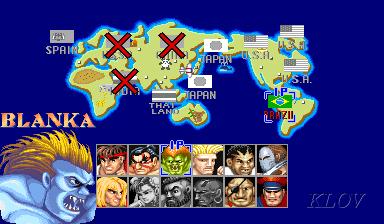
The biggest changes Capcom implemented for this version of the game were the ability to play as the four boss characters from the original Street Fighter 2 for the first time, bringing the number of playable characters up to a healthy 12. This allowed for a much more re-playable game experience as players had a host of new characters to master while the originals were slightly tweaked to allow for much more balanced gameplay. In addition to this the game speed was increased to allow for a more frantic and fast-paced experience while palette swaps of characters were introduced so that same characters could be fought against each other, something which was undoable in its predecessor [1].
Technology
Champion Edition was only ported to Japan's NEC PC engine which shocked many fans, "As Capcom was fiercely loyal to Nintendo at that point, gamers around the world were stunned that Capcom would allow its hottest game to date to appear on the NEC console, until it was announced that the SNES would receive the superior SF2 Turbo instead." [2]. Capcom had already planned another, much better version of the game to be released on the home market. This caused Sega to stop plans to port Champion Edition to their Genesis/Mega Drive console and instead change it to meet the standard of Street Fighter 2 Turbo - Hyper Fighting which was soon to be released on the SNES, creating competition on the console market [2].
The Name Change Fiasco
Three of the four boss characters would have their names changed from the Japanese version of the game from the fear of legal action from American boxer Mike Tyson. Originally, boxer character Balrog was caled Mike Bison, obviously very similar to that of Mike Tyson. To counteract this Capcom decided to switch the names of three of the boss characters so that there would be no grounds for a lawsuit [3].
M. Bison would be changed to Balrog.
Vega would be changed to M. Bison.
Balrog would be changed to Vega.
Sagat remained unchanged.

Street Fighter II Turbo — Hyper Fighting
The next installment in the Street Fighter 2 series was released a mere 8 months after the preceding game. Hyper Fighting was an interesting game as it was born from the angry response from Capcom to the pirate bootleggers of the time who were modifying Champion Edition chipsets of the game. These unofficial modifications by arcade owners resulted in a faster game speed, the ability to perform special moves in the air and other slight changes. "Furious that the pirate chips used altered versions of its code and that the modifications often made the game go haywire, Capcom kept the best of the pirates' ideas and filtered out the glitches in its release." [4]. The fact that Capcom dealt with player requests in this way, by really listening to what their audience wanted from the game, meant that with this new installment there was an almost guarantee that it would be well-received to a degree. It is also interesting to note that the new moves in the bootlegged versions of the game were also added to the official version, most notably Chun-Li's fireball, and were included in all games following it. The moves derived from piracy are still usable in the even the most recent edition to this franchise, Street Fighter 4.
Super Street Fighter II: The New Challengers
By the time Super Street Fighter 2 was released, Capcom was starting to feel the pressure from Midway's Mortal Kombat, "Rumours abound that Capcom rushed the first Super Street Fighter 2 out in order to counter the growing hype surrounding Midway’s Mortal Kombat." [5]. With Street Fighter clones now saturating the market and players starting to bore with the wait for Street Fighter 3, Capcom decided to take another stab with their tried and tested template with four brand new characters and brand new character animations. Using Capcom's brand new CPS2 system for the arcade version, the graphics and audio were updated and as brand new character animations had to be drawn for the new characters, the original characters also gained new animation frames and moves.
The new characters include English soldier-girl Cammy, Jamaican musician Dee Jay, Native American T. Hawk and Hong Kong movie star Fei-Long which brings the number of playable characters to 16, a massive number of characters for a game at the time. Regardless of this players were turning off to the Street Fighter hype machine and were starting to turn to other fighting games who were implementing new, novel ideas. Mortal Kombat was their biggest competitor and it was starting to garner alot more attention as the number of installments of Street Fighter 2 increased. "The "Mortal Kombat" series from Bally/Midway were crass, rather simplistic, gory, but pushed many more buttons with American youth than the cartoony, more stylised "Street Fighter" series did. The fatality finishing moves were also an intelligent and important innovation - more moves to learn, but what a way to impress your friends! " [6].

Super Street Fighter II Turbo
The final installment in the Street Fighter 2 series built upon everything the previous games had introduced to create to most balanced version of the game at the time. It introduced a new character, Akuma/Gouki, to the game as a response to games like Mortal Kombat who included special hidden enemies (e.g. Reptile in Mortal Kombat 1) who could be found by filling certain objectives in arcade mode. He was also a playable character by use of a code that could be inputted on the character select screen. In addition to this "Super Combos" were introduced as a form of desperation attack, something which other games at the time had already conceived [7]. It seemed as though Capcom was starting to play catch-up to other games around it and, like before, more and more players tired of the constant updates of the same game mold. The last installment of Street Fighter 2 was never ported to the console giants at the time and was only released to arcades.
[1] Street Fighter II' - Champion Edition, retrieved 05/12/09
[2] The History of Street Fighter, retrieved 05/12/09
[3] Street Fighter II - The World Warrior, retrieved 05/12/09
[4] The History of Street Fighter, retrieved 06/12/09
[5] Super Street Fighter II: The New Challengers Review, retrieved 06/12/09
[6] Simon Carless, Punch - Kick - Punch: A History of One-on-One Beat-Em-Ups, 24/04/98, retrieved 06/12/09
[7] The History of Street Fighter, retrieved 06/12/09

No comments:
Post a Comment