Friday, December 18, 2009

Building Street Fighter 4

Released almost a decade after the last numbered installment, Street Fighter 4 was released to arcades from July 2008 around the world. Much like the EX series, characters and environments are modeled in 3D with the gameplay staying on a 2D plane. While this is similar in appearance, the gameplay is reminiscent of the older games of the series, "The overall basic structure of Street Fighter IV feels like an attempt to carefully mix elements from the Third Strike and Super Turbo engines." [1].

Creating another installment for such a well-known franchise so many years after the last resulted in alot pressure for Capcom to bring results to the table. With such a long gap between Street Fighter 3 and 4, fans had left the franchise behind them after the technical and difficult to master third installment. It was up to Capcom to bring these fans back, who may not have played a Street Fighter game in almost a decade, with an exciting and accessible new game [2]. "Street Fighter IV was officially announced in October 2007, ten years after III's debut, instantly doubling the pressure on Ono, then doubling it again as media focus narrowed on him personally" [5].


It's interesting to note that Ono thinks that production on the franchise could have finished after Street Fighter 3, "we did pretty much all we could do with 2D fighters by the time we got to III." [3]. Hopes for a new Street Fighter game would have to wait, for many reasons. "In the beginning we were not exactly sure which direction to go. Should we stick to something entirely new? Should we stick to the roots?" [3]. The long time-frame that followed Street Fighter 3 was partly due to indecision in the production of the follow-up. People had moved onto other fighting games on the market which utilized 3D. How would Street Fighter embrace this new era of video games while retaining the trademark gameplay and characterization of the franchise? Instead of creating another game immediately to respond to this, Capcom left Street Fighter for the time being to concentrate on other projects and genres that were growing in popularity.

"Another reason I think that it's actually better that we let it sit on the back burner for ten years, is that technology has advanced so much in the last decade." [3]. The quest for a successful 3D fighter was populated by many fighters around the time that the last installment of Street Fighter was released. Even though the EX series dipped its toe into the 3D pool with partially successful results, Capcom saw that to make a game that would live up to their expectations while in-keeping with the well-known framework of the previous games, they would have to wait for technology to catch up. To create the iconic characters of the series faithfully in 3D as well as possible, technology would have to accommodate this. With the release of the Xbox 360 and the PlayStation 3 it was now possible to make the game that they hoped to make.

In a way, the conception of Street Fighter 4 brought the franchise full circle. In order to open the game to an audience who may never have played a Street Fighter before, those who are too young to remember the golden years or just new gamers, while bringing the hardcore fans back for more, Capcom decided to base the game on influences from the past. Instead of creating a game similar to any other fighter on the market today, Capcom stuck to a plan of gameplay that was already introduced as early as Street Fighter 2. "We haven't done anything terribly special. What we really need to do if we want brand new people playing fighting games, is we need to simplify things to the point where they no longer have to rely on looking at the manual." [4]. This stems directly from the aforementioned technical monster that was Street Fighter 3. To improve the franchise, simplicity would be key by referring back to the games of the 90s, before 3D fighting games took hold of the genre. "Basically what you're seeing is a result of the influence of the best parts of those games from back then, so it's not your imagination if it feels a bit like Fatal Fury here and there, or even some other game. We were very strongly influenced by the history of the fighting game heyday." [3]. By looking at the best games at that time, the creators of Street Fighter 4 tried to fix the wrong parts of certain games and took the best parts of others, with simplicity and appeal in mind, a surefire way to bring fans back to the ailing franchise with a taste of nostalgia. By using the same character designs that were used in Street Fighter 2, players would hopefully think that even though the platform and technology had changed, the franchise and gameplay would still be the same as it was back then. Nostalgia sells, and it seemed that Capcom noticed this. By waiting many years to release Street Fighter 4, people would look forward to playing the new version of the game that they loved years before, by making it so similar to Street Fighter 2. Thorough market research was carried out and fan favourites were included (voted by the players themselves), with the inclusion of a lower number of new characters than usual [5]. Gouken, the character everyone thought was playable years before, finally was a character that could be used. It was as though Capcom noticed Street Fighter 3 did not perform as well generally with their audience, so the new game focused much more on the golden age of the series, with no characters from the third installment.


The advertising campaign that was created for Street Fighter 4 reflected the nostalgic angle the game hoped to accomplish. Above shows one of the many ads that were made, referencing Chun-Li's lightning kick where the player would repeatedly tap the kick button to perform it. "The ads are playful, mischievous, very funny and packed to the brim with the arcade nostalgia that this title is gorging upon. Slogans such as “Return of the 15ft Pimpslap”, “To Haduoken or not to Haduoken” and “Reach Out and Punch Somebody” capture that cartoon violence and essence of fun that remains utterly unique within the Beat ‘Em Up genre..." [6]. The ads are fueled by the cultural capital of the franchise, filled with intertextual references of the days of Street Fighter 2 and the arcade explosion it created.


[1] Stephen Kleckner, Street Fighter IV Preview, 21/02/08, retrieved 18/12/09
[2] Brandon Sheffield, Saving Street Fighter: Yoshi Ono on Building Street Fighter IV, Page 1, 26/09/08, retrieved 19/12/09
[3] Christian Nutt, Q&A: Yoshi Ono On Bringing Back Street Fighter, 20/03/08, retrieved 19/12/09
[4] Brandon Sheffield, Saving Street Fighter: Yoshi Ono on Building Street Fighter IV, Page 5, 26/09/08, retrieved 22/12/09
[5] Rus McLaughlin, IGN Presents the History of Street Fighter, Page 8, 16/02/09, retrieved 22/12/09
[6] Thom Dinsdale, Street Fighter IV Advertising Punching Above Its Weight, 03/11/08, retrieved 01/01/10

Wednesday, December 16, 2009

The Interquel and the Struggles With 3D


With the advent of the PlayStation and the CD-ROM in 1995, Capcom moved to step away from cartridges and created the first all-new Street Fighter game produced since Street Fighter 2, Street Fighter Alpha (or Zero in some territories). Visually, the game was similar in art style to other Capcom games like Darkstalkers and X-Men: Children of the Atom and included a character roster from the original Street Fighter, Final Fight and Street Fighter 2 with some brand new additions aswell. As mentioned previously, Street Fighter 2: The Animated Movie heavily influenced the game and would take place between Street Fighter and Street Fighter 2.


The Third Dimension
As you can see above, the game looked very different from the games that preceded it, but retained many of the features that were introduced in the Street Fighter 2 installments, while still running on the CPS II hardware that the later Street Fighter 2 games ran on. However, even though it was well received and would go on to create two sequels (with Alpha 3 being my personal favourite Street Fighter game ever), the 2D limitations were starting to show. "These new moves aside, there isn't much to distinguish Alpha from the older series. It's still a great game, but you can't help noticing the limitations presented by the lack of that third dimension." [1]. With the preceding quote stemming from an article which is now 13 years old, it shows how people at the time were now looking for more from the fighting genre. As other games had branched out into the 3D world, Street Fighter was starting to be left behind, regardless of the well received, precise gameplay. It seemed, just as they had got it right, people were already hoping for something else from the genre. Games like Virtua Fighter and Tekken answered the call and Street Fighter started to languish with diminishing interest in arcades and at home. "Just as "Tomb Raider" is allegedly "Prince of Persia" with the extra dimension, the only major differences with the "VF" series over Capcom's 2D competitors were flashier graphics, multiple camera angles, the novelty and approaching-realism excitement of having three dimensions. Of course, that was plenty enough to guarantee that 3D, the gimmick of the 90s, would overwhelm the genre. Nowadays, most people laugh and simply refuse to play 2D beat-em-ups." [2].

Late Starters
Seeing the way in which games were now headed, Capcom tried something new and ventured out of their 2D niche to challenge the 3D beat-em-ups that were already dominating home consoles. Street Fighter EX was their response."They turned to one of the original Street Fighter II planners, Akira "Akiman" Nishitani and his recently formed development company, Arika (his name spelled backwards) to co-produce it. Together, Capcom and Arika put Street Fighter EX on the market in 1996, and it rapidly bombed." [3]. While Street Fighter EX was not a particularly bad game (from personal experience), it had retained the gameplay elements of the original games, it was now in 3D (albeit on a 2D plane) but was incredibly slow in comparison. Moving into the third dimension was not a beautiful transition, characters looked incredibly blocky and had lost the personality that was so well conveyed in 2D. In addition to this new characters which were hardly memorable were introduced while the original character numbers were dwindled. The sudden switch to 3D made the game feel nothing like a Street Fighter game, which was to be expected, but with the dramatic slow-down of gameplay and forgettable new cast from Arika it showed there was still a chance for Capcom to have made a game that might have been popular with the gaming community if the latter problems were rectified.


The Street Fighter franchise fell into the background, even with a number of changes and a step into 3D people had moved on to better games. The glory days of Street Fighter 2 were no more.

A Fresh Start
Still, Capcom powered on and finally released the sequel that audiences had been asking for since the early 90s. Street Fighter 3 however was produced and created by none of the original team that created the blockbuster Street Fighter 2. Yoshiki Okamoto and Noritaka Funamizu were the only two people left that had worked on the latter, but "...when Capcom finally decided to move the franchise forward, a full decade after SF II, neither was involved." [3]. To hopefully reignite the franchise, Street Fighter 3 was originally planned to include noone from any of the previous Street Fighter games. This angered the remaining fans and Ryu and Ken were added to the roster [3]. Regardless of the new characters, the game returned to 2D, what Capcom did best, and the franchise stayed there through the changes and subsequent installments of the Street Fighter 3. Nonetheless the game is regarded by many as the best Street Fighter game so far, noted for its balanced gameplay but unmemorable cast, "Otherwise, the newcomers felt a little too plain, or else a little too strange. Blanka and Psycho-Powers aside, Street Fighter had always relied on relatively human combatants. The new generation was heavy on genetic mutants and oddballs, starting with red, blue and Speedo-wearing Gill himself." [4].

While not immediately picked up upon at the time, Street Fighter 3 has gained a recent following in the last two years and is growing in popularity. Yoshi Ono, who was heavily involved in the creation of Street Fighter 3, notes that "...at the time, [Street Fighter 3] was the right game to come out, from our perspective. The way that fighting games were at the time, their popularity, and the need for something more technical and complex... we felt that it suited the air at the time. The reason it seems to be ahead of its time and the reason why it's gaining more popularity now is probably because it's taken people that long to get really good at it, and they appreciate the depth that the game has to offer." [5]. As it was considered such a technical game, it took a while for players to grow to a professional level and for the popularity of the game to grow in turn.

[1] Street Fighter Alpha Review, 25/11/96, retrieved 16/12/09
[2] Simon Carless, Punch - Kick - Punch: A History of One-on-One Beat-Em-Ups, 24/04/98, retrieved 16/12/09
[3] Rus McLaughlin, IGN Presents the History of Street Fighter, 16/02/09, retrieved 16/12/09
[4] Rus McLaughlin, IGN Presents the History of Street Fighter, 16/02/09, retrieved 16/12/09
[5] Brandon Sheffield, Saving Street Fighter, 26/09/08, retrieved 19/12/09

Tuesday, December 15, 2009

Competition & Controversy


Even though Street Fighter 2 found massive success it still found healthy competition. It was inevitable that there would be imitators and as the game became popular a variety of clones started to appear to challenge its fighting crown. No other franchise quite gave Street Fighter the competition that Mortal Kombat did as the two games vied for control of an audience which was divided. Some wanted precise gameplay and cartoon visuals, others wanted to rip out their opponents spine and show it to them.

Mortal Kombat became the yin to Street Fighter's yang. "...a programmer and designer tasked with coming up with a new game to capitalize on the sudden popularity of Street Fighter II and the fighting game genre. One can imagine their thought process: "Well, we can't do what Street Fighter does, because they're better at it. We have to be something else entirely."" [1]. The result was a realistic, gory game with digitized graphics of real people based on the Street Fighter one-on-one mold. The game gave Street Fighter 2, the game that popularized the fighting game genre in the first place, its competition as arcades would fill with teenagers hoping to pull off a mutilating fatality on their rival. Mortal Kombat's success stemmed from this. Seeing the (relatively less in comparison) controversy that Street Fighter had created from its portrayal of violence, the creators of Mortal Kombat saw the opening for free publicity, and lots of it.


"Outraged parents led to outraged news outlets which led to more notoriety than Midway ever could have paid an advertising agency for. Nothing is cooler for kids than something that an authority tells them they can't do." [1]. It was a complete success and helped establish the fighting game genre as a whole as a noteworthy new area of video gaming while giving Street Fighter a run for its money a more and more people flocked away from its arcade machines. Mortal Kombat inspired many changes in the subsequent installments of Street Fighter 2. Hidden characters would be introduced, while the character roster would be increased to a high 16 to respond to the amount found in Mortal Kombat 2. However both franchises would find it difficult to follow their initial successes and would struggle to break into the realms of 3D allowing others to take their place.

It's interesting to hear that, almost two decades later, the competition Mortal Kombat and Street Fighter went through would be welcomed today. At a time where one-on-one fighters have become something of a underdog, Chris Kramer, Senior Director of Communications at Capcom, hopes to reignite the genre and recapture the popularity of the Street Fighter franchise, ""I think we'd welcome the return of a rivalry like that," says Kramer. "It would be good for and fun for both companies." [2]. A competitive market in the fighting game genre would generate much more interest in the games which suffered after "arcades up and vanished in North America and Europe..." [2]. With the recent release of Street Fighter 4 and the possible release of a new Mortal Kombat after Midway were taken over by Warner Bros. there are hopes that the genre will take the centre stage again as it did in 1991.

It's also interesting to note that Ed Boon, creator of Mortal Kombat, hoped to create a crossover game, Street Fighter vs. Mortal Kombat, in a similar vein to the Capcom vs. Marvel games [3]. It will probably never happen, but if it were to be created it would most likely become a sales juggernaut and could single handedly bring the one-on-one fighter back to the forefront of multiplayer gaming. One can hope!

[1] Ben Gelinas, Style vs. Substance, Round 2, FINISH HIM!, 16/06/2009, retrieved 16/12/2009
[2] Leigh Alexander,Interview: Capcom 'Would Welcome' Return Of Street Fighter, Mortal Kombat Brand Rivalry, 21/08/09, retrieved 16/12/09
[3] Wesley Yin-Poole, Ed Boon tried to make Mortal Kombat vs. Street Fighter, 18/04/09, retrieved 16/12/09

Sunday, December 6, 2009

Cultural Reverberations: Film & TV - The Early Years


Yes, this is from a real film. Starring Jackie Chan, "City Hunter" is a prime example of the effect Street Fighter 2 had on society. It's popularity exploded after its release and the characters became embroiled in gaming culture, although maybe not as recognizable as other gaming characters at the time (e.g. Mario and Sonic The Hedgehog).

This inevitably brings us to this...


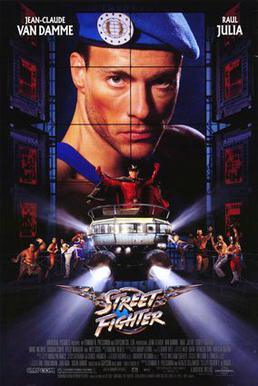
The simply named film Street Fighter was released a mere 3 years after Street Fighter 2 was released, a strong sign of the impact the game had in such a short space of time. The video game-to-movie adaption is famous for all the wrong reasons however as being universally panned by critics and the public alike. It is voted one of the 10 worst video game movies by Time, and this trend is followed on many other such lists [1]. This did not stop it from being a commercial success though. The film is loosely based on the storyline of Street Fighter 2 and focuses much more on the battle against M. Bison through the eyes of Guile (Jean-Claude Van Damme) and Cammy (Kylie Minogue). "It's rumoured that Capcom funded the movie to the tune of millions of dollars and were badly burned when it was a big flop. Oops." [2].


Both an arcade and home version game of the film were created which, interestingly, resembled Mortal Kombat in many more ways than it did the original games of the franchise. In a similar way to Mortal Kombat, the games used photo-capture, digitized graphics of the actors from the film and included similar gameplay to that of Super Street Fighter 2 Turbo.


In addition to this a Japanese animated film was produced in the same year as the American live-action movie, while a year later both an American animated and anime TV series were produced. Street Fighter 2: The Animated Movie was well received in comparison to the live-action film, and again shows how popular the game had become at the time. This video gives a review and overview of the film while the next video shows the fight scene between Vega and Chun-Li where many of the moves from the game are referenced.


The success of Street Fighter 2: The Animated Movie is said to have started the creation of the Street Fighter Alpha series which followed on from Street Fighter 2. The new series included many elements from the film which are still noticeable today.


Above are the title cards for Street Fighter II V, an TV anime series first aired in Japan, and Street Fighter, the US TV cartoon series.

[1] Top 10 Worst Video Game Movies, retrieved 07/12/09
[2] Simon Carless, Punch - Kick - Punch: A History of One-on-One Beat-Em-Ups, 24/04/98, retrieved 07/12/09

Saturday, December 5, 2009

Capcom Capitalizes

Once Street Fighter fever had run rampant through arcades in 1991, Capcom knew they had something special on their hands. The players wanted more from the game and Capcom listened, taking the opportunity to take advantage of the golden situation they were now in. In response, a newly updated version of Street Fighter 2 was released in April of 1992, called Street Fighter 2 - Champion Edition (or Street Fighter 2 Dash in Japan).

Street Fighter 2: Champion Edition


Differences
The biggest changes Capcom implemented for this version of the game were the ability to play as the four boss characters from the original Street Fighter 2 for the first time, bringing the number of playable characters up to a healthy 12. This allowed for a much more re-playable game experience as players had a host of new characters to master while the originals were slightly tweaked to allow for much more balanced gameplay. In addition to this the game speed was increased to allow for a more frantic and fast-paced experience while palette swaps of characters were introduced so that same characters could be fought against each other, something which was undoable in its predecessor [1].

Technology
Champion Edition was only ported to Japan's NEC PC engine which shocked many fans, "As Capcom was fiercely loyal to Nintendo at that point, gamers around the world were stunned that Capcom would allow its hottest game to date to appear on the NEC console, until it was announced that the SNES would receive the superior SF2 Turbo instead." [2]. Capcom had already planned another, much better version of the game to be released on the home market. This caused Sega to stop plans to port Champion Edition to their Genesis/Mega Drive console and instead change it to meet the standard of Street Fighter 2 Turbo - Hyper Fighting which was soon to be released on the SNES, creating competition on the console market [2].

The Name Change Fiasco
Three of the four boss characters would have their names changed from the Japanese version of the game from the fear of legal action from American boxer Mike Tyson. Originally, boxer character Balrog was caled Mike Bison, obviously very similar to that of Mike Tyson. To counteract this Capcom decided to switch the names of three of the boss characters so that there would be no grounds for a lawsuit [3].

M. Bison would be changed to Balrog.
Vega would be changed to M. Bison.
Balrog would be changed to Vega.
Sagat remained unchanged.


Street Fighter II Turbo — Hyper Fighting

The next installment in the Street Fighter 2 series was released a mere 8 months after the preceding game. Hyper Fighting was an interesting game as it was born from the angry response from Capcom to the pirate bootleggers of the time who were modifying Champion Edition chipsets of the game. These unofficial modifications by arcade owners resulted in a faster game speed, the ability to perform special moves in the air and other slight changes. "Furious that the pirate chips used altered versions of its code and that the modifications often made the game go haywire, Capcom kept the best of the pirates' ideas and filtered out the glitches in its release." [4]. The fact that Capcom dealt with player requests in this way, by really listening to what their audience wanted from the game, meant that with this new installment there was an almost guarantee that it would be well-received to a degree. It is also interesting to note that the new moves in the bootlegged versions of the game were also added to the official version, most notably Chun-Li's fireball, and were included in all games following it. The moves derived from piracy are still usable in the even the most recent edition to this franchise, Street Fighter 4.

Super Street Fighter II: The New Challengers

By the time Super Street Fighter 2 was released, Capcom was starting to feel the pressure from Midway's Mortal Kombat, "Rumours abound that Capcom rushed the first Super Street Fighter 2 out in order to counter the growing hype surrounding Midway’s Mortal Kombat." [5]. With Street Fighter clones now saturating the market and players starting to bore with the wait for Street Fighter 3, Capcom decided to take another stab with their tried and tested template with four brand new characters and brand new character animations. Using Capcom's brand new CPS2 system for the arcade version, the graphics and audio were updated and as brand new character animations had to be drawn for the new characters, the original characters also gained new animation frames and moves.

The new characters include English soldier-girl Cammy, Jamaican musician Dee Jay, Native American T. Hawk and Hong Kong movie star Fei-Long which brings the number of playable characters to 16, a massive number of characters for a game at the time. Regardless of this players were turning off to the Street Fighter hype machine and were starting to turn to other fighting games who were implementing new, novel ideas. Mortal Kombat was their biggest competitor and it was starting to garner alot more attention as the number of installments of Street Fighter 2 increased. "The "Mortal Kombat" series from Bally/Midway were crass, rather simplistic, gory, but pushed many more buttons with American youth than the cartoony, more stylised "Street Fighter" series did. The fatality finishing moves were also an intelligent and important innovation - more moves to learn, but what a way to impress your friends! " [6].


Super Street Fighter II Turbo

The final installment in the Street Fighter 2 series built upon everything the previous games had introduced to create to most balanced version of the game at the time. It introduced a new character, Akuma/Gouki, to the game as a response to games like Mortal Kombat who included special hidden enemies (e.g. Reptile in Mortal Kombat 1) who could be found by filling certain objectives in arcade mode. He was also a playable character by use of a code that could be inputted on the character select screen. In addition to this "Super Combos" were introduced as a form of desperation attack, something which other games at the time had already conceived [7]. It seemed as though Capcom was starting to play catch-up to other games around it and, like before, more and more players tired of the constant updates of the same game mold. The last installment of Street Fighter 2 was never ported to the console giants at the time and was only released to arcades.

[1] Street Fighter II' - Champion Edition, retrieved 05/12/09
[2] The History of Street Fighter, retrieved 05/12/09
[3] Street Fighter II - The World Warrior, retrieved 05/12/09
[4] The History of Street Fighter, retrieved 06/12/09
[5] Super Street Fighter II: The New Challengers Review, retrieved 06/12/09
[6] Simon Carless, Punch - Kick - Punch: A History of One-on-One Beat-Em-Ups, 24/04/98, retrieved 06/12/09
[7] The History of Street Fighter, retrieved 06/12/09

Friday, December 4, 2009

The First Lady of Fighting Games


The first ever female character to appear in a one-on-one fighting game, it has to be said immediately that, regardless of her standing in gaming history, she was still designed into a sex symbol and stereotype which portrayed women in an unrealistic way. Anyone who has the original Street Fighter 2 games remembers that she was weaker than the rest of the male characters, was overtly attractive (perfect for the teenage fanboys to get excited over) and acted much like a young schoolgirl when she won a match [1]. Ethically, not the best image to portray, but because of her speed in the game she was as good a fighter as everyone else, something completely unseen until then. In many games previous to Street Fighter 2, with the exception of Metroid, females would take a supporting role or would be the damsel in distress. Even in the Capcom game prior to Street Fighter 2, the side-scrolling walk-and-beat-em-up Final Fight (which interestingly also had two of its main characters included in later Street Fighter games), the main goal of the game was to take one of three men to save the kidnapped daughter of the mayor. Street Fighter 2 helped change this. Samus Aran fought off alien hordes with an arm-cannon, Chun-Li fought off men twice her size with her lightning kicks. She may have been a stereotype, but she was a stereotype who garnered attention for being the woman who could stand with the men and still kick their behinds into next week.

Since then Chun-Li has become "synonymous with strong females." [2] and has "inspired countless future game heroines." [3]. As the franchise progressed Chun-Li became much less of a typecast and her Interpol officer profession came much more into her character, building her into a strong, memorable character still popular today. The inclusion of Chun-Li was one of the first steps on the road to making video gaming much more of a gender neutral affair and it is probably fair to say that, without her, we might not have some of modern video gaming's biggest female characters. Would we still have Lara Croft or Jill Valentine?


[1] D. F. Smith, Top 25 Street Fighters: The Final Five, retrieved 05/12/09
[2] The Wednesday 10: Gaming Heroines, retrieved 05/12/09
[3] Tyler Wilde, Street Fighter Week: The evolution of Chun-Li and Blanka, retrieved 05/12/09

The Genre Definer

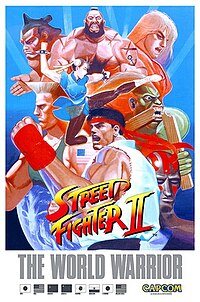
With the release of the original Street Fighter, Capcom had introduced the gaming world to a solid foundation of gameplay and control that would be taken even further in March of 1991 with the next installment in the franchise. Noted as the game that refined and defined the fighting game genre, Street Fighter 2: The World Warrior was released to universal acclaim and is held in the hearts of millions of fans even today, 18 years after its initial release. Additionally, Street Fighter 2 is still Capcom's biggest selling video game title ever, with sales in the region of 6.3 million [1]. As one blogger states, "When one thinks of fighting games, one thinks Street Fighter II." [2].


The Success Story
Known as the game that opened the flood gates to allow a plethora of fighting games to follow it in the 1990s, it was the game that everyone wanted to use their money on in the arcades. "The birth of the modern beat-em-up only really arrived with "Street Fighter 2", from Capcom in 1991." [3]. It would be re-released multiple times, each time with extra characters, more balanced gameplay and other slight changes due to the success of the first game. It would not be until 1992 that people could play the original game in their own home when it was ported to the SNES. This proved to be a very successful decision for Capcom. According to a 1992 issue of Gamest magazine in Japan, Street Fighter 2 was selling for 7 times the cost because of lack of stock, a sign of the lengths people would go to to own the game [4]. This led to "...pirates created an unsanctioned, copyright-infringing Famicom/NES version, which saw a very limited release in Asian markets." [7] due to the massive demand. Both the arcade and second iteration of the home version of the game (called Street Fighter 2: Champion Edition or Street Fighter 2: Dash in Japan) would go on to win the magazine's Best Game Award in 1991 and 1992 respectively, while the former would also win Best Action Game [4]. The award for best fighting game, like in the whole of the games industry, was yet to be established until later after the effect of what Street Fighter 2 had accomplished was noticed by other companies, spawning many clones and starting the boom of the beat-em-up. The game would go on to be ported to a number of different consoles, would be followed by 5 updated versions, strike a blow for female protagonists in an action game and spawn films and other such media. Since Street Fighter 2 many sequels in the franchise have been released and a worldwide fan culture has been built around the characters and moves-lists, attaining worldwide recognition.

Street Fighter 2 is undoubtedly the most successful game in the franchise and when it was released to arcades in 1991 noone could have expected the success that it would find. "Street Fighter II arrived and just exploded in popularity, as prolonged positive word of mouth from established arcade fanatics caused other game players to leave their homes and check out the revolutionary new thing in arcades." [5]. At the time, arcades had hit a low point as people were staying home to do their daily gaming. Street Fighter 2 helped change this as people queued up to challenge their friends and complete strangers for bragging rights and more time on the machine. "SF2 machines were hardly vacant for long, and most of the time had people lining up to insert quarters for 15-297 seconds worth of play. So arcade owners bought more machines and even clones when they emerged" [5]. However the success was nowhere near the universal appeal of games like Space Invaders and Pac-Man and even though many called it "The Greatest Game Ever", its primary gaming audience was made up of males from its appeal towards them [5].

The Winning Formula
As mentioned before, the original Street Fighter had found a niche and, with its follower, Capcom ran with it. But why was the game so successful?

1. Technology. With the release of the SNES and the Sega Genesis/Mega Drive, programmers had alot more space and technology to work with to create a much more fluid and visually stunning game that was like nothing else at the time. "Utilizing Capcom's proven CPS arcade chipset, which had powered the revolutionary large characters and colorful backgrounds of Final Fight, Yoshiki Okamoto's team developed a joystick and button scanning routine that would revolutionize the industry." [6]. Unlike in the first game, the animations were slick and the controls were too. Where you would try multiple times to perfect a move in the original game, Street Fighter 2 allowed players to enter controls quickly and efficiently, introducing new ways of inputting moves and play styles for each of the characters. Creating this mix of gameplay was something the first game in the franchise did not have and was a definite selling point for its sequel.

2. The Characters. Even though the characters were noted for being stereotypical, it did not stop them from being a strong reason for the games popularity. Coupled with the fact that there was no other one-on-one fighting game around at the time, Street Fighter 2 included 8 playable characters each with their own hidden move sets, "Street Fighter II was the first one-on-one fighting game to give players a choice from a variety of player characters, an option which created hitherto unknown levels of depth and replay value for an arcade game. Each player character had a fighting style with roughly 30 or more moves, including previously nonexistent grappling moves such as throws, as well as two or three special hidden attacks per character." [7].

The original 8 are now some of the most identifiable characters in gaming history.


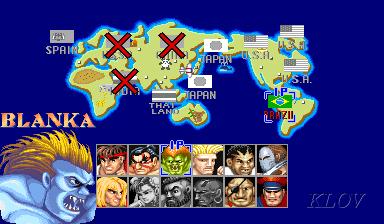
Ryu and Ken are the only characters from the original Street Fighter that are playable in the first edition of Street Fighter 2 (Sagat, who is a sub-boss in arcade mode becomes playable in the Champion Edition of the game). They are joined by a host of new characters from around the world, including the sumo wrestler E. Honda, yoga master Dhalsim, pilot Guile, jungle monster Blanka, russian wrestler Zangief and the "first female of fighting games", police-woman Chun-Li. With such a vast array of characters for a game of its time (to be updated to 12 characters only a year later), everyone found their own favourite and made a bond with them, piling money into arcade machines to learn all their moves in hopes of defeating their friends next time they are challenged. In addition to this, "There were many advantages to this - for a start, you were much more likely to replay the game to find out what each of the characters looked like and what they did. Allowing people to evolve their own favourites and styles was a massive breakthrough." [3].


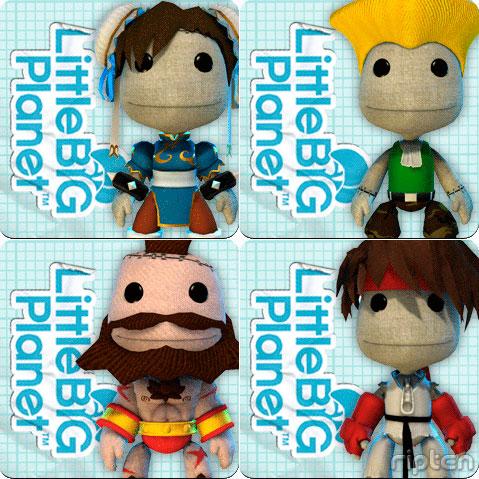
Even today the characters are still popular and recognizable in modern media. Above shows the customizable outfits of a "sackboy" from the downloadable content of the PlayStation 3 game "Little Big Planet" in the style of Chun-Li, Guile, Zangief and Ryu.

However it could be said that the character stereotypes negatively portray certain areas of the world that they originate from. When looking at the character and background level design of each of the characters, it could be said there is a bias against American and European culture in the game as the countries visited in the game in these regions include people drinking and acting rowdy in the background, whereas other areas depict feelings of serenity. "Overall, there seems to be clear bias against European and American culture in the game, or at least a bias that most people would find unfavorable. The three stages with no onlookers are all in Asia, and both Japanese stages have no onlookers. The only Asian stage with onlookers is China. In addition, the Russian and American stages depict people drinking. The fighters who are not Japanese are depicted as animalistic (Blanka), primitive (Dhalsim) or brutal (Zangief). Chun Li plays in a dirty area, but her fighting abilities are depicted as artistic. Guile and Ken are both depicted as good, clean fighters, but are marred by onlookers who are acting impolite. E. Honda is not depicted as an extremly beautiful fighter, but his stage is a symbol of cleanliness. Ryu combines a clean, beautiful fighting technique with a serene, beautiful location. So, to sum up, Street Fighter II seems to display Japanese culture in the best light, followed by America and China. The third world nations of India, Russia and Brazil come in extremly unfavorably." [9].

3. Character Specific Moves. With the large character roster came character specific "special" moves that only they could do. In addition to regular attacks, by adding special moves to the game the gameplay became far more tactical and stylish as certain attacks would hurl fireballs over the stage at your enemy or send you hurtling towards them feet first, while looking extremely cool. With this the game became far more re-playable. Special moves were not printed on the arcade machines so it was through word of mouth that moves like the elusive "HADOUKEN!" would be explained and shown to others. This adds the element of wanting to perfect that move that you just cannot seem to get right, so you put more money into the machine and you keep trying. When you finally succeed it's another weapon in your arsenal that you can add to your play style in the future. "What purpose does hiding the special moves have? Well, it adds to initial approachability at the cost of making it harder to master. And that's not necessarily a disadvantage to a fighting game, as mastery is supposed to be difficult. That helps to make matches more interesting since, early in a title's life at least, the players must work without full understanding of a game's options." [8].

4. The Controls. The inclusion of 6 usable buttons added much more strategy to the game. 3 punch and 3 kick buttons at varying strengths for each one enabled the player to balance their assault on their enemy. Strong attacks would take more damage off your opponent but would leave you more open to attack, while weak attacks would be quick and could break an opponents combo or defense if placed correctly.


[1] Street Fighter 2 still Capcom's best seller, retrieved 04/12/09
[2] Classic Game of the Week: Street Fighter 2, retrieved 04/12/09
[3] Simon Carless, Punch - Kick - Punch: A History of One-on-One Beat-Em-Ups, 24/04/98, retrieved 04/12/09
[4] "第5回ゲーメスト大賞" (in Japanese). GAMEST (68): 4, retrieved 04/12/09
[5] The History of Street Fighter, retrieved 04/12/09
[6] The History of Street Fighter, retrieved 04/12/09
[7] The History of Street Fighter, retrieved 04/12/09
[8] John Harris, Game Design Essentials: 20 Mysterious Games, 14/01/08, retrieved 04/12/09
[9] Ethnic Stereotypes in Street Fighter 2, retrieved 07/12/09

Tuesday, December 1, 2009

Franchise Beginnings

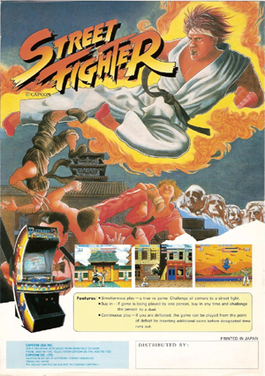
The Street Fighter franchise premiered in 1987 with it's eponymous installment, only in arcades.


What is it?
"Street Fighter" was first released to arcades in a specially designed cabinet, fitted with mechatronic, pressure sensitive pads that players would hit with different strengths to make their character release different kinds of punches and kicks on their enemy. This kind of hardware could have created quite a rudimentary type of immersion, however according to Jap-Sai.com, "Story has it that one player actually climbed up on top of the machine and drop kicked the bonus game (and control panel) into total and utter oblivion." [1]. To counteract this Capcom re-released it as a six button machine which proved to be a very successful idea.

The first game in the franchise introduced many of the ideas found in the later games. The side-scrolling, 2D, 1 versus 1 gameplay aspects of the game made their first appearance here, as well as much of the overall controls of the playable character. In addition to this it introduced simultaneous 2 player competitive gaming to the franchise. Street Fighter created a solid foundation for it's follower, the highly popular Street Fighter 2, to build upon.


Finding a Niche
Street Fighter was released at a time when there was nothing else much like it on the video games market. At the time there was much attention focuses on the games Hang On, Out Run and After Burner as they popularized the 3D simulation genre, which inadvertently allowed Street Fighter to find a niche . Street Fighter was something incredibly different to what was around at the time, drawing upon the games Yie Ar Kung Fu and Karate Champ that preceded it and creating a brand new gaming experience that gamers in arcades had never seen before. "Capcom, for its part, had studied both Data East's 1984 one-on-one fighting game Karate Champ and Konami's 1985 title Yie Ar Kung Fu before releasing its own game, Street Fighter, in 1987. Like Hang On, Out Run, After Burner and other 3-D simulation titles, Capcom's lonely Street Fighter had found a niche - it was different from everything else, and so people wanted to play it." [2].


Technological Limitations
Regardless of its popularity in its niche market, Street Fighter was nowhere near as well received as its predecessor. This could be due to the lack of technology advancements that allowed for a more streamlined gaming experience. "In the mid-1980's, however, one-on-one fighting games were in their infancy, and the limitations of technology prevented them from catching on. It was hard enough back then to program a game to recognize the fast motions of a joystick, let alone have eight or ten megabytes worth of game graphics or enough RAM to display one tenth of them at once." [3].

Gameplay with the joysticks was hit-and-miss as the game could not always keep up with what the player inputted. Even at the birth of the franchise players would still "button-bash", something prevalent in the fighting genre, where players would enter commands in incredibly quick succession in hopes of performing certain attacks. Of course this would occur unintentionally aswell, but as the game's controls were not incredibly responsive it would cause gameplay to become disjointed. 'Lacking animation to walk fluidly, characters staggered on the screen, and in the absence of a fluid control scheme, some moves took five or ten tries to execute while others shot out so quickly that opponents never had a chance to defend against them." [3].


[1] Street Fighter, retrieved 02/12/09
[2] The History of Street Fighter retrieved 02/12/09
[3] The History of Street Fighter retrieved 02/12/09

Saturday, October 24, 2009

The Hypothesis

For my CRS3 module I will be investigating the Capcom beat-em-up franchise, Street Fighter. A well-known brand which has now been around for over 20 years, it helped solidify the "fighting game" genre with memorable characters and signature moves and became a huge success in 1991 onwards after the release of the groundbreaking Street Fighter 2. However I will also look into the downfall of the franchise after its initial success, how it struggled to enter the 3D era against the competitors that were cloned from the franchise in the first place until its success with the recent Street Fighter 4.

I will compile a case study noting the cultural, social, economic, technological and ethical attributes of the industry. I will focus on the ideas of:

-advertising
-globalization and success
-beyond the object response: film, TV and memorabilia
-participatory culture
-audience demographics
-horizontal, vertical and diagonal integration
-ethics
-stereotypes and typecasts

-among other elements that I will also look into.


The first time you'll ever see Akuma take back an evil quote.